
Lighting for cannabis: secrets to perfect growth and flowering
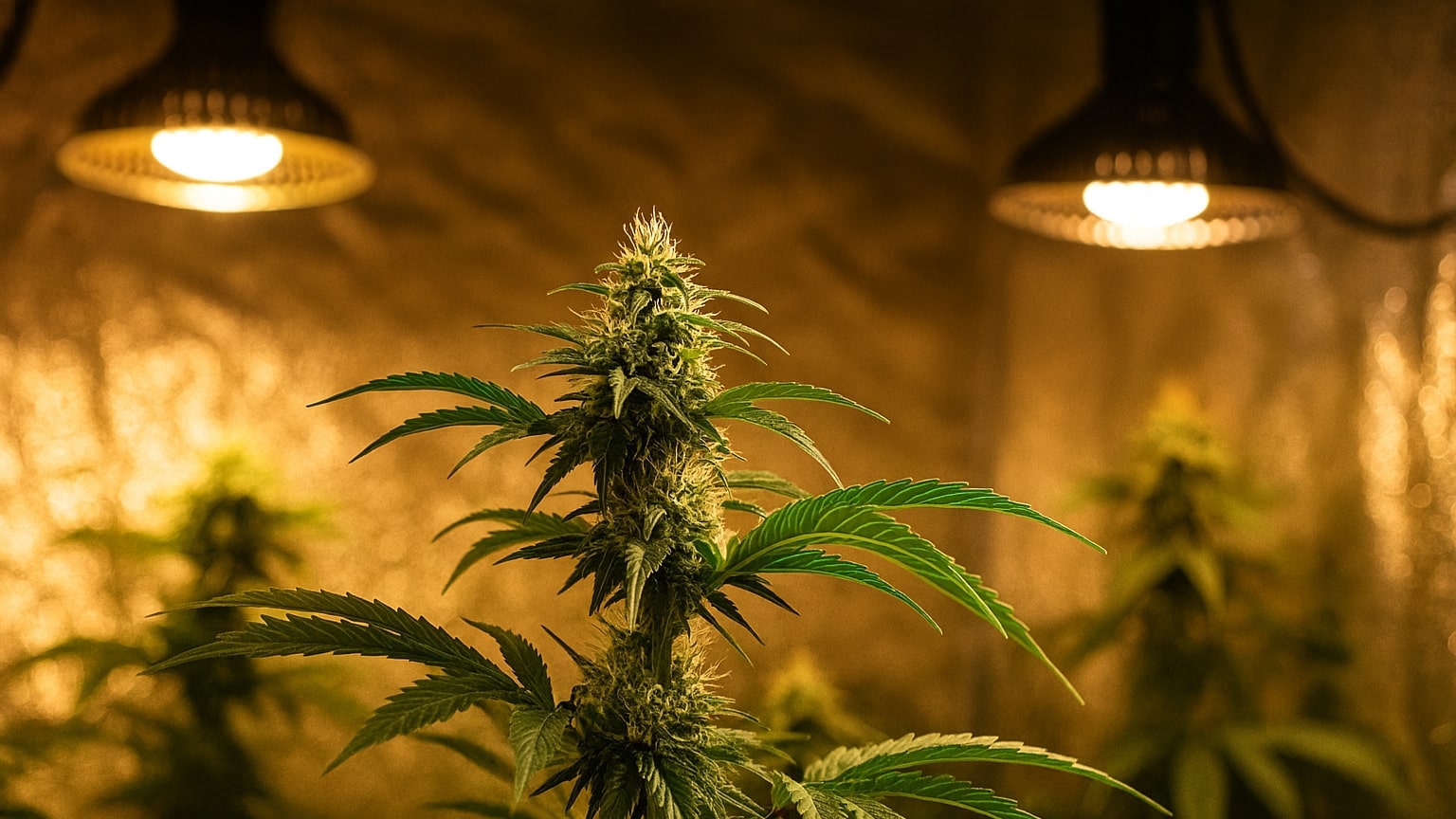
Light for growing cannabis is the basis of the entire cultivation cycle. Without proper lighting, plants will not be able to fully absorb energy, which means they will not grow, branch out, or form resinous buds. Under natural conditions, cannabis gets its energy from the sun, but in indoor growing, artificial light sources take over this role. It is the lighting for the grow that creates an artificial “sunny environment” that replaces natural conditions and allows the grower to fully control the process.
The main task of light is to provide the optimal light spectrum for plants, because each light wave performs its own function. The blue spectrum is responsible for active vegetative growth: it promotes the development of strong stems and broad leaves, making the bush compact and stable. The red spectrum, on the contrary, stimulates the flowering process — under its influence, buds form and the amount of resin increases. That is why the influence of the blue and red spectrums is a key factor when choosing lamps for cannabis.
For successful growing, it is also important to know how many hours of light a plant needs during vegetation. This period usually lasts 18-20 hours a day. When the plant starts flowering, the daylight hours are reduced to 12 hours — this is the optimal amount to start bud formation.
Thus, proper lighting for growing is not just bright light. It is a carefully designed tool that determines the health of plants, their structure, and the final yield. When choosing lamps for cannabis, it is important to consider not only power and energy consumption, but also the quality of the spectrum, the uniformity of lighting, and suitability for the stages of growth. After all, it is the right light that turns an ordinary grow into a truly professional one.
Types of lighting and mode selection
There are several main types of lamps used in industry. Each light source has its own characteristics, advantages, and scope of application.
1. HPS lamps for growing (sodium)
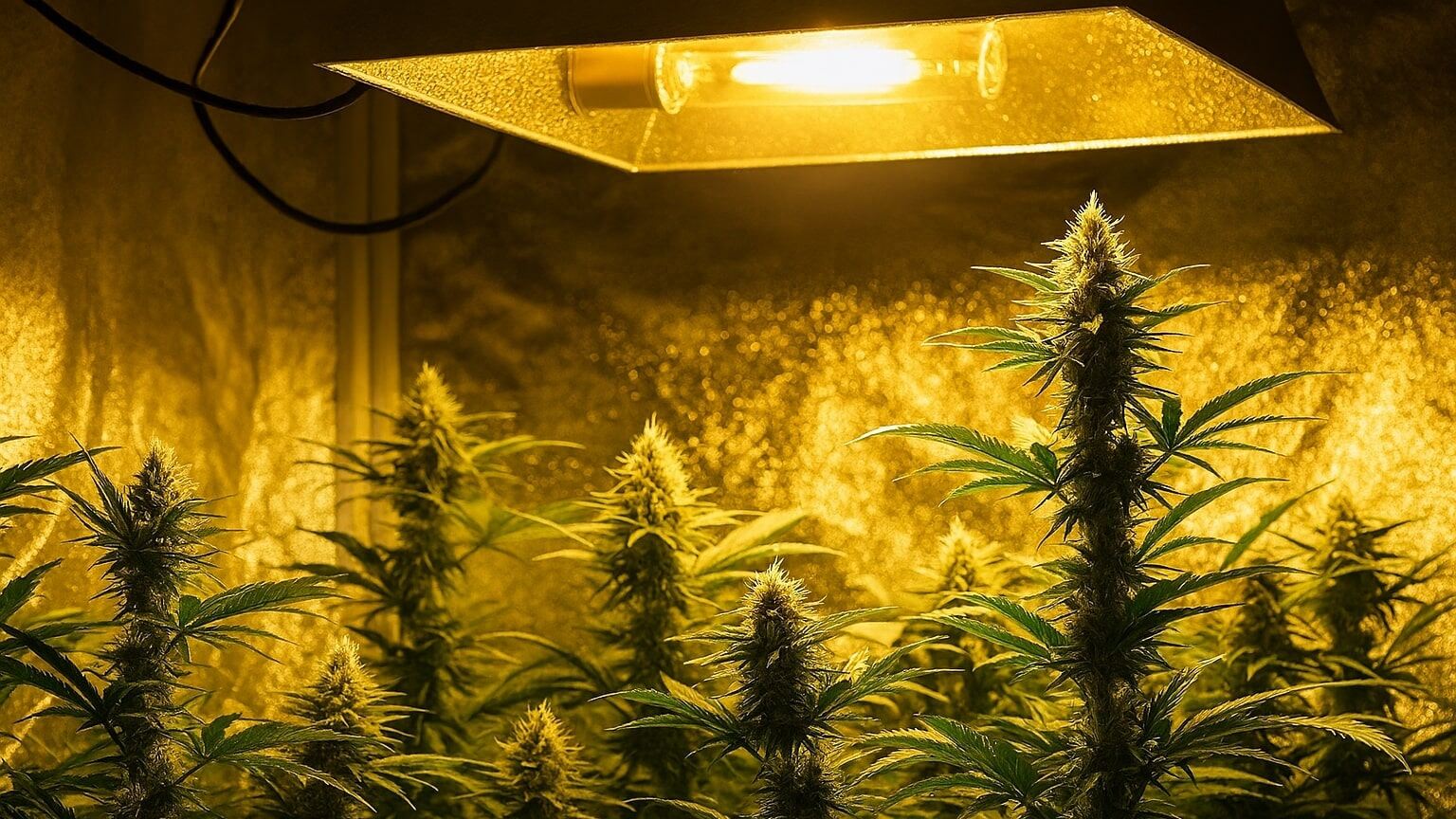
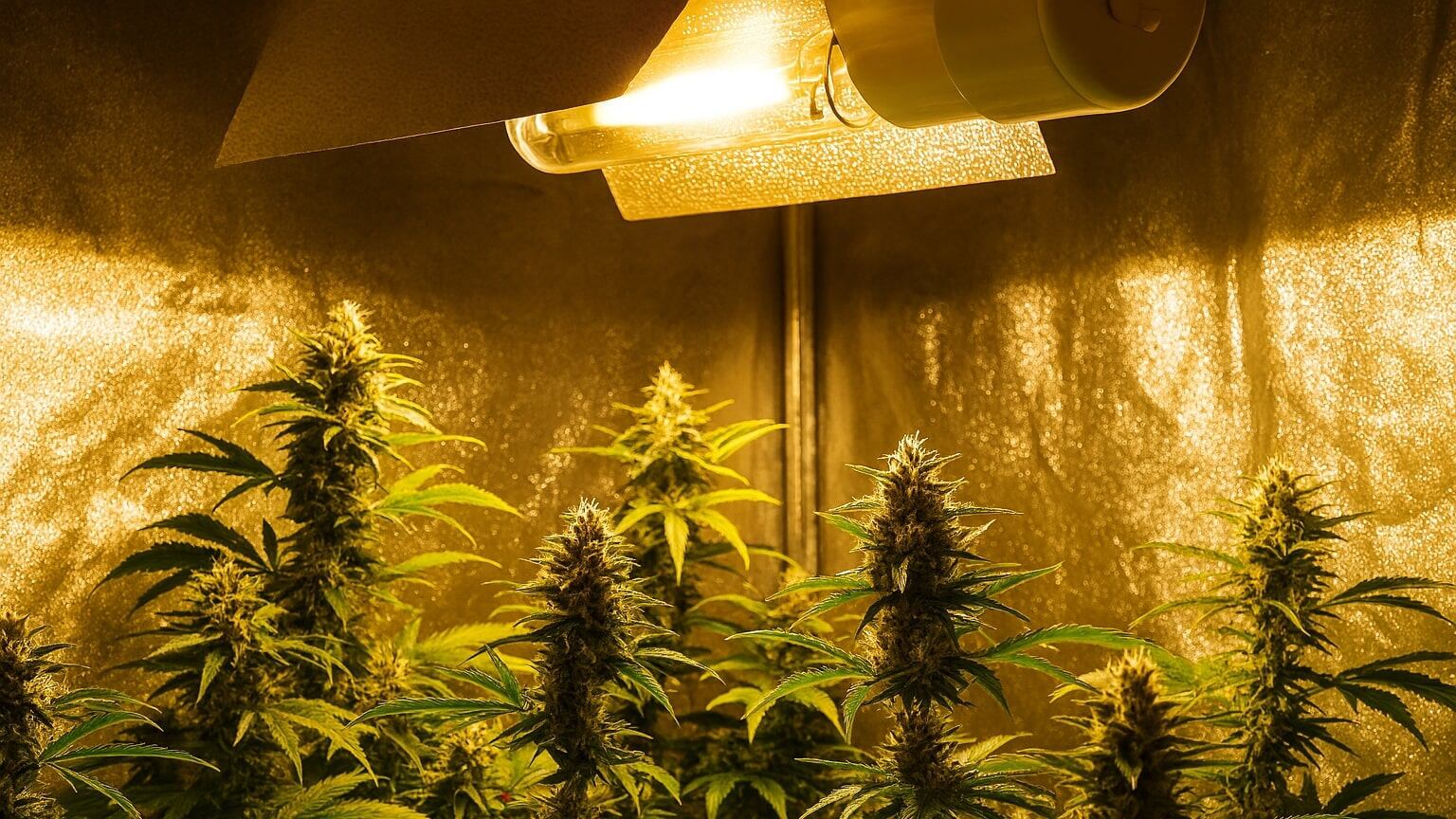
HPS (High Pressure Sodium) — a classic for the flowering phase. These lamps emit a rich, warm red-orange light that is ideal for the budding period.
Advantages:
• High light intensity and high lumen output for cannabis.
• Stimulates the formation of large, dense buds.
• Suitable for professional growers with large spaces.
Disadvantages:
• High energy consumption of LED and HPS (LEDs consume much less energy).
• Strong heating, which requires additional ventilation.
• The spectrum is less versatile for the early stages of growth.
HPS lamps are ideal for photoperiodic varieties, especially when growing powerful sativas that need bright light to form long, resinous buds.
2. MH lamps for plants (metal halide)
MH (Metal Halide) — the optimal choice for the vegetative stage. These lamps emit a cool white-blue light that promotes active foliage growth, strong stems, and short internodes.
Advantages:
• Ideal light spectrum for plants in the growth stage.
• Strengthens the structure of the bush and reduces shoot elongation.
• Well suited for sativa strains that tend to grow vertically.
Disadvantages:
• High lamp temperature.
• Significant energy consumption.
• Less effective during the flowering stage.
The use of MH lamps helps to grow powerful and healthy bushes, which, when switching to HPS or LED, quickly enter the flowering phase and form dense buds..
3. LEDs for marijuana (LED systems)
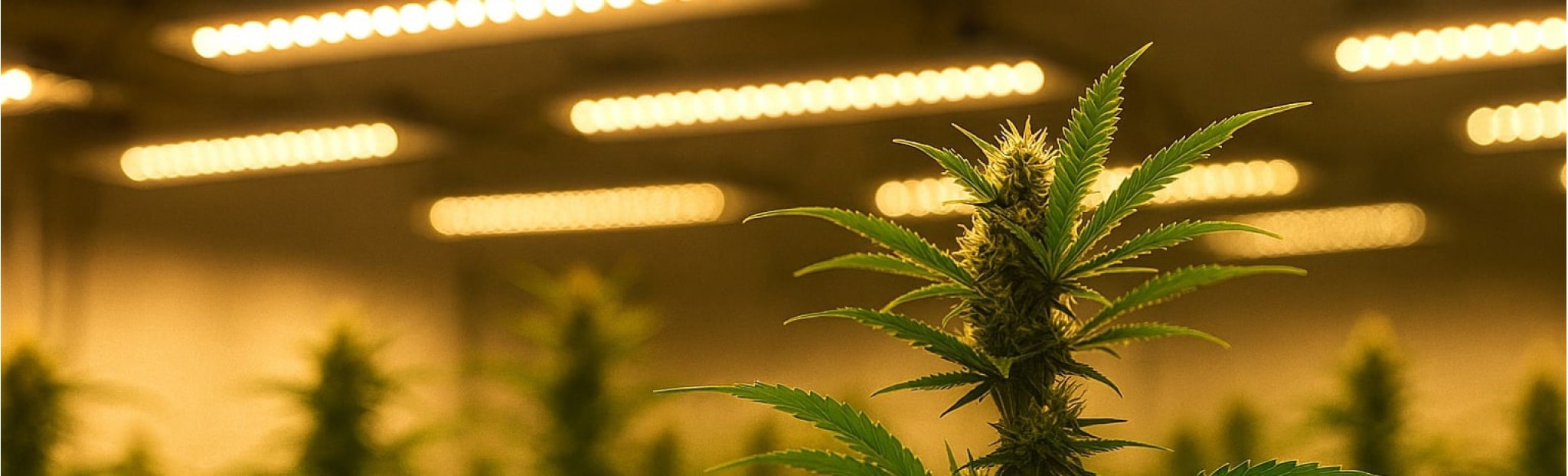
Modern LED lamps for cannabis are considered the best solution for most growers. These installations provide the perfect balance between spectrum, intensity, and energy efficiency.
Advantages:
• Full control over the influence of the blue and red spectrum — you can change the spectrum for different stages.
• Minimal energy consumption, which is especially important when the grow box is in constant operation.
• No overheating — lamps can be placed closer to plants.
• Long service life.
Disadvantages:
• Higher purchase price.
• Some cheap models provide low PAR and lumen levels for cannabis.
4. Lighting mode and photoperiod
It is equally important to set the light regime correctly, as it determines the transition of the plant from the vegetative stage to the flowering phase.
• How many hours of light during vegetation — plants typically require 18–20 hours of light and 4–6 hours of darkness. This helps sativa and indica plants grow strong green mass.
• How many hours of light during flowering — usually 12 hours of light and 12 hours of darkness. A reduction in the photoperiod signals to the plant that autumn is approaching and triggers the flowering process.
• For autoflowering varieties, the light regime does not need to be changed — they bloom regardless of the length of the day, but the best development is observed with constant 18/6 lighting.
If you use lighting for hydroponics, it is important to remember that with this method, plants are completely dependent on artificial light, because the roots receive nutrients from the solution, and photosynthesis is only possible with the right lighting.
How to choose the best light and increase your yield
Once the grower has decided on the type of lamp, the next important step is to select the optimal light parameters and organize its correct distribution. The quality and quantity of the harvest largely depends on the lighting. Indica and sativa respond differently to light intensity, day length, and spectrum. Therefore, the approach to choosing the best light for indoor growing must be individualized.
1. Basic lighting parameters
In order for plants to develop as effectively as possible, it is necessary to understand which light parameters have the greatest impact on photosynthesis and yield:
| Parameter | Description | Optimal values |
| PAR (Photosynthetically Active Radiation) | The amount of light available for photosynthesis | 400–700 nm |
| Lumens for cannabis | The overall brightness of light visible to the human eye | 30,000–50,000 lumens/m² |
| Light spectrum for plants | Ratio of blue and red ranges | Blue — 20–30%, red — 60–70% |
| Power consumption of LED and HPS | The amount of energy consumed by lamps | LED — savings of up to 70% |
| Lighting temperature | Color temperature measured in Kelvin | Vegetation: 5000–6500 K; Flowering: 2700–3500 K |
2. Comparison of LED and sodium lamps
Modern growers are increasingly choosing LED systems, but HPS lamps for growing are still popular. To understand the difference, it is worth considering them according to the main criteria:
| Criterion | LEDs for marijuana | HPS lamps for growing |
| Energy consumption | Low, savings of up to 60–70% | High, requires a powerful power supply |
| Heat release | Minimal, does not overheat the grow box | Strong, requires ventilation |
| Spectrum of light | Adjustable (blue + red) | Predominantly red spectrum |
| Service life | Up to 50,000 hours | Up to 10,000 hours |
| Yield | Stable when properly configured | High, but depends on cooling |
| Price | Higher at the start, pays off over time | Cheaper, but less energy efficient |
3. How to increase your harvest with light
Even with high-quality lamps, a grower can significantly increase their yield with light if they follow a few key rules:
Optimal distance to the lamp.
• For LED — 30–45 cm to the tops.
• For HPS — 40–60 cm.
Too close — risk of leaf burn, too far — loss of light intensity.
Uniform light distribution.
The use of reflective surfaces (Mylar, white matte paint) helps to illuminate the lower branches, which is especially important for bushy Indica varieties.
Photoperiod adjustment.
For photoperiodic plants, it is important to strictly observe:
• How many hours of light during vegetation — 18–20 hours.
• How many hours of light during flowering — 12 hours of light and 12 hours of darkness.
This is especially critical for indica, as it reacts more quickly to changes in the length of daylight hours.
Temperature and humidity control.
Heat from lamps raises the temperature, which can cause stress. Maintain the optimum:
• During vegetation: 22–28 °C.
• During flowering: 20–26 °C.
Result
When choosing the best light for indoor growing, it is important to consider the type of strain, the characteristics of the room, and the grower's goals. Indica loves a soft warm spectrum and short days, which is perfectly achieved with HPS or combined lighting. Sativa, on the other hand, requires more hours of light and prefers a cold, white-blue spectrum, which is ideally provided by LED systems.